
Strengthening Supply Chains in South Carolina
South Carolina's strong industrial base creates an opportunity to build more resilient supply chains close to home. By shortening the distance between production and procurement, companies can reduce supply chain risk, lower emissions and keep more economic activity within the state.
For original equipment manufacturers (OEMs), increasing local purchasing can strengthen operations while creating new opportunities for South Carolina suppliers. But as manufacturers advance sustainability commitments, expectations for their suppliers are evolving too.
Sustain SC developed its three-part Supply Chain Workshop Series in response to conversations with OEMs across South Carolina’s automotive, packaging, critical materials, thermal systems and energy sectors. Those conversations highlighted common challenges including changing supplier expectations, data readiness and varying levels of sustainability capacity among small and mid-sized businesses.
The series moved participants through three stages: Education, Engagement and Connection. After earlier workshops focused on understanding sustainability requests and how suppliers can respond, the September 15 session in Columbia focused on putting those lessons into action through practical guidance, state resources and curated buyer to supplier connections.
Several key takeaways emerged from the day.
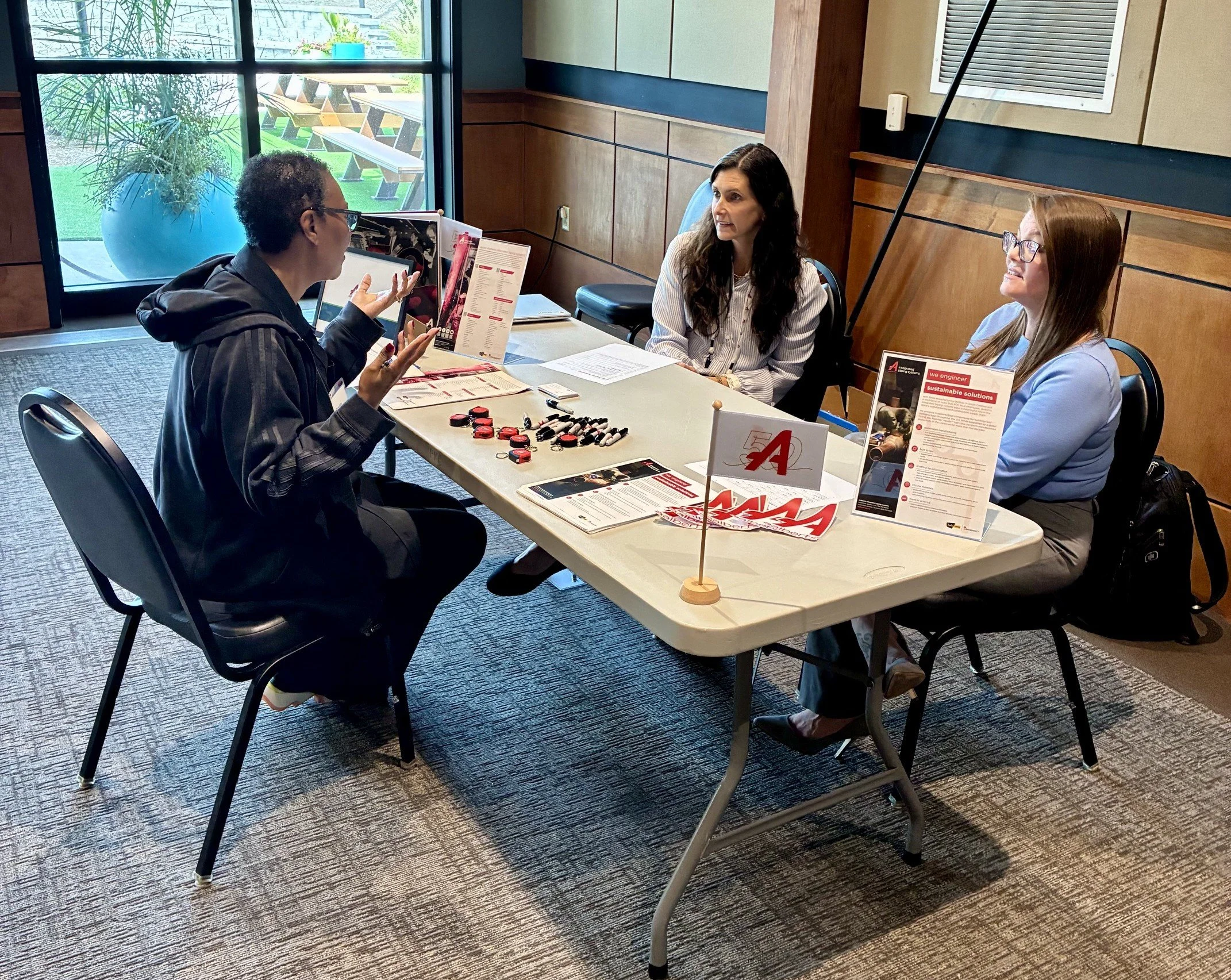
Suppliers connected with industrial buyers during curated 10-minute business-to-business matchmaking meetings.
Sustainability Expectations Are Moving Through the Supply Chain
For many manufacturers, sustainability performance extends beyond their own facilities. Supply chains can account for up to 90 percent of an organization’s greenhouse gas emissions, meaning OEMs often depend on suppliers to make progress toward broader sustainability goals.
South Carolina manufacturers, particularly those with a global presence, are increasingly working within frameworks such as the Global Reporting Initiative (GRI), Greenhouse Gas Protocol and Climate Disclosure Project (CDP). As Erica Call, Head of Sustainability Consulting and Energy Services for Siemens, explained, those expectations often move through the supply chain as buyers seek more information from the companies they do business with.
For suppliers, that can mean navigating new questionnaires, data requests and reporting expectations while continuing to compete on quality, price and performance.
Dr. Carrie Queenan of the University of South Carolina’s Darla Moore School of Business noted that greater transparency can require additional effort, but it can also reveal opportunities to improve operations, reduce costs and strengthen competitiveness.
Start Small and Measure What Matters
One message carried throughout the workshop: businesses do not need to have everything figured out before getting started.
Daryl Whitt of Black Bear Strategies, Katherine Canoy of Environ and Kait Sagan of GEL encouraged suppliers to identify the sustainability issues most relevant to their business, establish a baseline, implement practical solutions and track progress over time.
A reporting framework can provide structure, but the goal is not reporting for reporting’s sake. Good data can help companies understand their operations, identify opportunities for improvement and communicate more effectively with customers.
For South Carolina, that can translate into stronger local supplier relationships, more resilient operations and more competitive businesses.
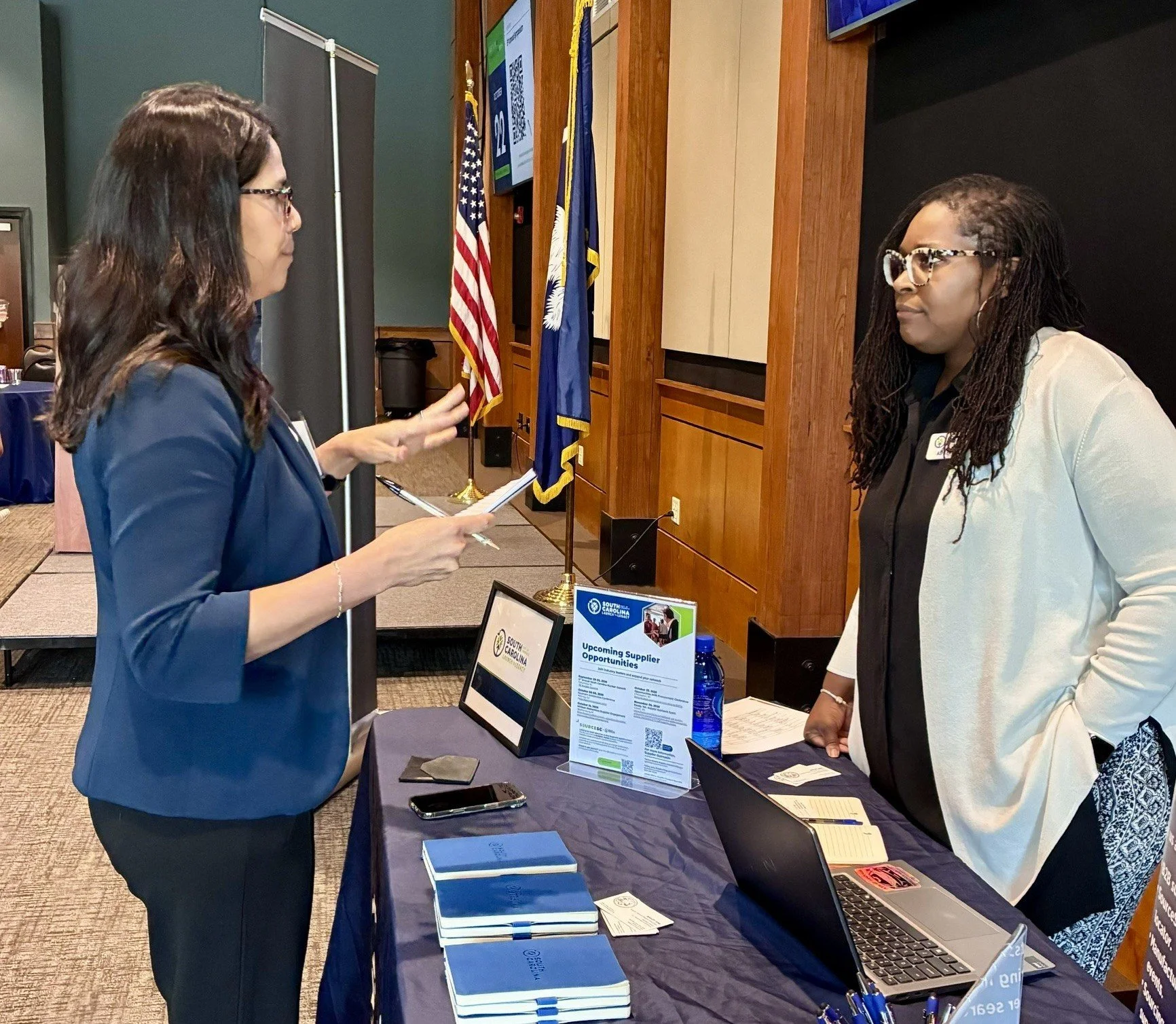
Suppliers connected with state resources to enhance their ability to be found by industrial buyers seeking to source locally.
Connecting Suppliers with South Carolina Resources
The final workshop also connected participants with statewide resources that can support local sourcing, workforce development and supplier engagement.
CONNEX SC, a manufacturer-to-manufacturer platform administered by the South Carolina Manufacturing Extension Partnership (SCMEP) and funded by the South Carolina Department of Commerce, includes roughly 3,900 South Carolina company profiles. Fewer than 250 have been claimed and completed, creating an opportunity for suppliers to improve their visibility to industrial buyers searching for in-state options.
The South Carolina Department of Commerce also supports buyer to supplier connections through SourceSC, while retrainSC, a program of the South Carolina Technical College System, offers qualifying companies a payroll tax withholding rebate to help offset training costs for first-line manufacturing employees.
Turning Education into Connection
The series culminated in curated, 10-minute business-to-business matchmaking meetings between South Carolina suppliers and industrial buyers including Aalberts Integrated Piping, Milliken & Company, FENECON, Rolls-Royce, ZF Transmission and Siemens.
The meetings gave suppliers a clearer understanding of what buyers are looking for while giving manufacturers greater visibility into capabilities already available within South Carolina.
That connection is central to stronger local supply chains, helping buyers find what they need while creating more opportunities for South Carolina businesses to grow.
What’s Next
The connections built through the Supply Chain Workshop Series do not end with the final session.
On October 22, Sustain SC’s 5th Annual Sustainability Symposium at Central Energy in Columbia will bring together business leaders, policymakers, conservation partners and sustainability professionals from across South Carolina to build relationships and connect across sectors.
Then, on November 10 from 11:00 a.m. to 12:00 p.m., Sustain SC will continue offering supply chain education with a free virtual technical assistance webinar, “How Suppliers and OEMs Can Work Together to Meet Shared Sustainability Goals.”
During the webinar, Black Bear Strategies will share the supplier perspective, including the practical barriers businesses face when adopting sustainability practices, while Siemens will offer the OEM perspective, including the business case for supplier sustainability and resources available to support progress.
The webinar is open to manufacturers, suppliers, procurement and supply chain professionals, sustainability leads and others working to align sustainability efforts across a value chain.
Join us at the Sustainability Symposium on October 22 and continue the supply chain conversation during our November 10 technical assistance webinar.