
Advancing Sustainable Supply Chains Through Education, Engagement and Connection
South Carolina's strong industrial base can reduce supply chain risk, lower emissions and accelerate regional economic growth by shortening the distance between production and procurement.
Derisking operations and finding savings through local purchasing is a win for original equipment manufacturers (OEMs) and South Carolina suppliers. As these companies advance local purchasing, South Carolina suppliers are expected to advance their own sustainability commitments as well.
Sustain SC’s three-part Supply Chain Workshop Series was designed to support local suppliers in positioning themselves to do business with South Carolina’s OEMs. Workshop three, on September 15, brought together key learnings and fostered key connections as suppliers put their learnings into practice during curated business-to-business matchmaking.
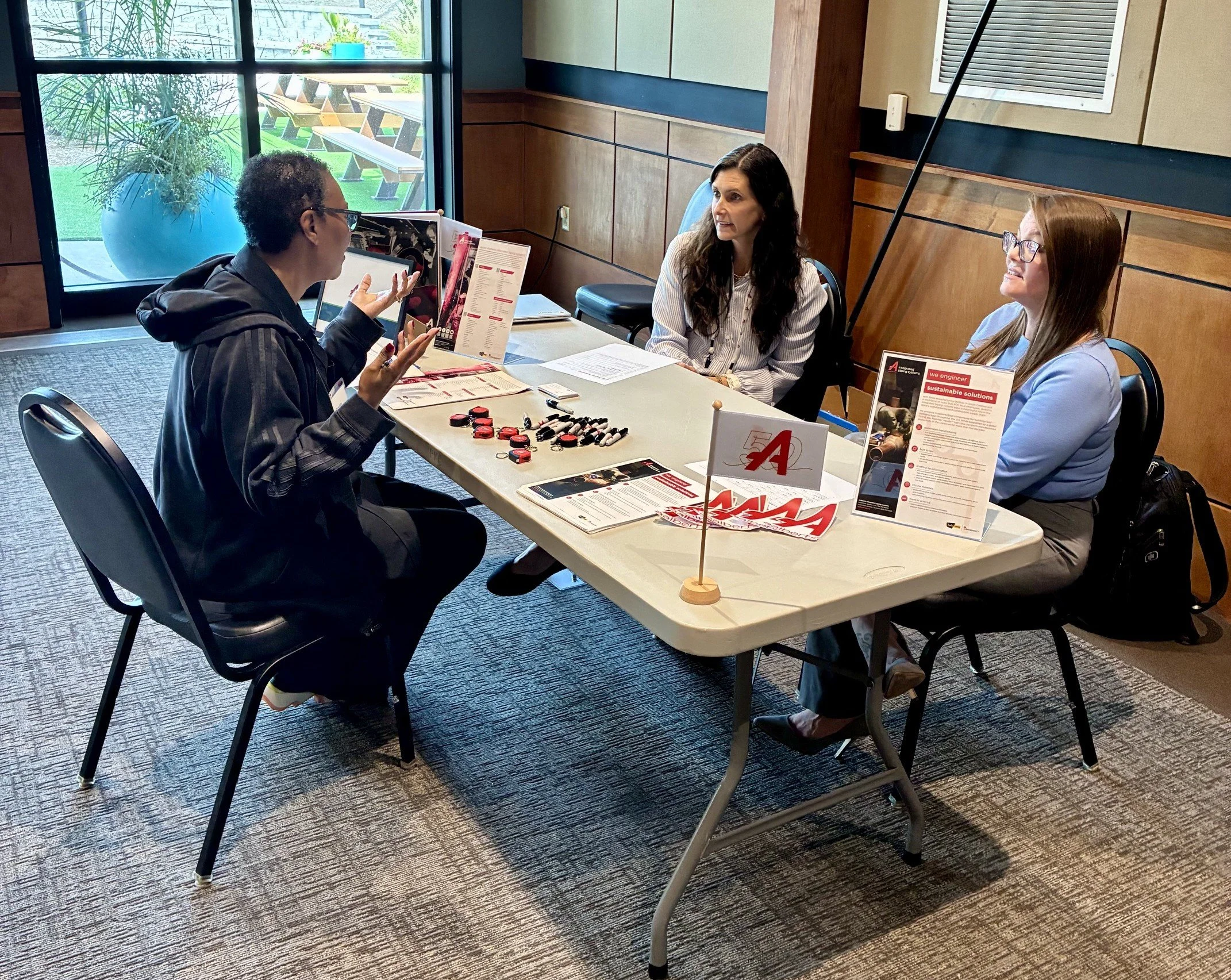
Suppliers connected with industrial buyers during curated 10-minute business-to-business matchmaking meetings.
Cascading commitments and supplier compliance
Because supply chains account for up to 90 percent of an organization's greenhouse gas emissions, an OEM cannot reach its own targets without its suppliers.
OEMs in South Carolina, particularly those with a global presence, are adopting global sustainability frameworks such as Global Reporting Initiative (GRI), the Greenhouse Gas Protocol and the Climate Disclosure Project. These commitments, made as part of this sustainability journey, said Erica Call, Head of Sustainability Consulting and Energy Services for Siemens, cascade from buyers to suppliers. Suppliers are now wrestling with how to comply with buyer requests and to remain competitive.
While compliance is voluntary in the United States, it is increasingly necessary to remain competitive. Dr. Carrie Queenan of the University of South Carolina's Darla Moore School of Business, noted the tradeoffs suppliers must contemplate when choosing to comply. Adoption invites scrutiny. In her assessment, it also improves operations and profitability because the act of reporting forces continual improvement.
That benefit matters for suppliers weighing whether to adopt a sustainability framework like GRI and to begin reporting. While nearly every framework can be intimidating, each offers an on-ramp to meet suppliers where they are.
Navigating the tradeoffs: Sustain SC’s three-part workshop series
Sustain SC designed this three-part supply chain workshop series to help suppliers contemplate this complex opportunity and the accountability. This workshop series emerged from direct interviews with OEMs across automotive, packaging, critical materials, thermal systems and energy.
Those conversations revealed six consistent themes: inconsistent language across questionnaires, accelerating compliance pressure, data readiness as the central barrier, maturity gaps among small and mid-sized suppliers and rising expectations for verification as opportunities.
Our response was this three-part workshop series — Education in May in Mount Pleasant, Engagement in June in Spartanburg, Connection in September in Columbia — open to any supplier with a South Carolina footprint, member or not, and built for companies with no dedicated sustainability staff.
September’s third and final session in the series was about building those connections with suppliers, buyers and state resources to support local procurement and stronger supply chains.
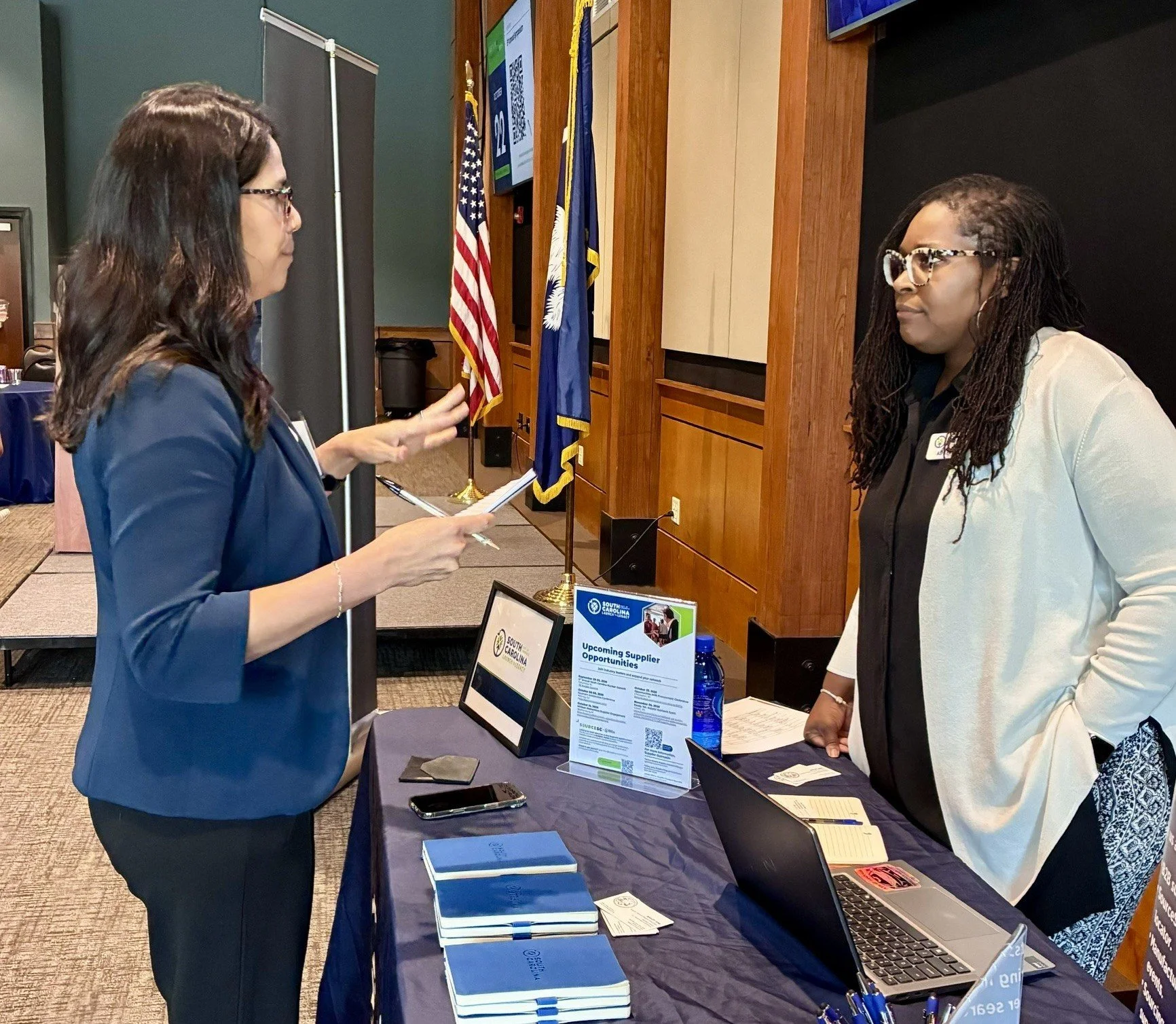
Suppliers connected with state resources to enhance their ability to be found by industrial buyers seeking to source locally.
From Education to Connection: State Resources
Workshop one demystified common supplier sustainability requests, and workshop two explored how to comply with such supplier requests. This third and final workshop in the series connected suppliers with resources to turn their sustainable supply chain intentions into action.
Three organizations set up information tables to share state resources to help support buyers and suppliers in making local sourcing easier.
CONNEX SC, the state's manufacturer-to-manufacturer platform administered by the South Carolina Manufacturing Extension Partnership (SCMEP) is a free online database and supply chain platform designed to connect South Carolina Manufacturers and suppliers. The platform, funded by the SC Department of Commerce, holds roughly 3,900 South Carolina company profiles. Fewer than 250 of those profiles have been claimed and completed. A supplier that completes its profile including capabilities, certifications and products can now be found by industrial buyers actively searching for in-state alternatives.
In addition to its supplier outreach and year-round matchmaking events, the SC Chamber of Commerce matches buyers and supplier through SourceSC. The platform connects local small and medium-sized businesses manufacturers and service providers with in-state opportunities with major industrial buyers.
Lastly, RetrainSC, a program of SC Technical College System, offers a payroll tax withholding rebate to offset training for first-line manufacturing employees.
Sustain SC closed out the day by facilitating connections between suppliers and large buyers through curated 10-minute business-to-business matchmaking meeting. During this session, South Carolina suppliers connected with industrial buyers including Aalberts Integrated Piping, Milliken & Company, FENECON, Rolls-Royce, ZF Transmission and Siemens.
The outcome was greater understanding of what buyers and suppliers in South Carolina need to do business together. The advice to suppliers was simple: start small and measure what matters.
Start small and measure what matters
Every business, regardless of size, started their reporting journey in the same place. And while every business is unique, the journey is similar. Daryl Whitt of Black Bear Strategies, Katherine Canoy of Environ and Kait Sagan of GEL advised suppliers to prioritize what matters most, establish a baseline, implement solutions and monitor progress. Adopting a framework guides measurement, supports establishment of a baseline and guides road map development. When done well this becomes a competitive advantage, moving a company from a reactive annual scramble to proactive communication with large industrial buyers. That’s a win for South Carolina’s OEMs, for local suppliers, for conservation and for commerce.
What’s next
This conversation continues at our fifth annual Sustainability Symposium on Oct. 22 at Central Energy in Columbia and in November with a virtual Supply Chain Technical Assistance workshop. Symposium is the one time of year we all come together – as members and nonmembers – to address South Carolina’s most pressing sustainability challenges and opportunities. We invite you to join us.