
On October 21–22, Sustain SC brought together nearly 200 business leaders, policymakers and conservation experts at Central Energy in Columbia for two days of learning, collaboration and networking at the intersection of commerce and conservation.
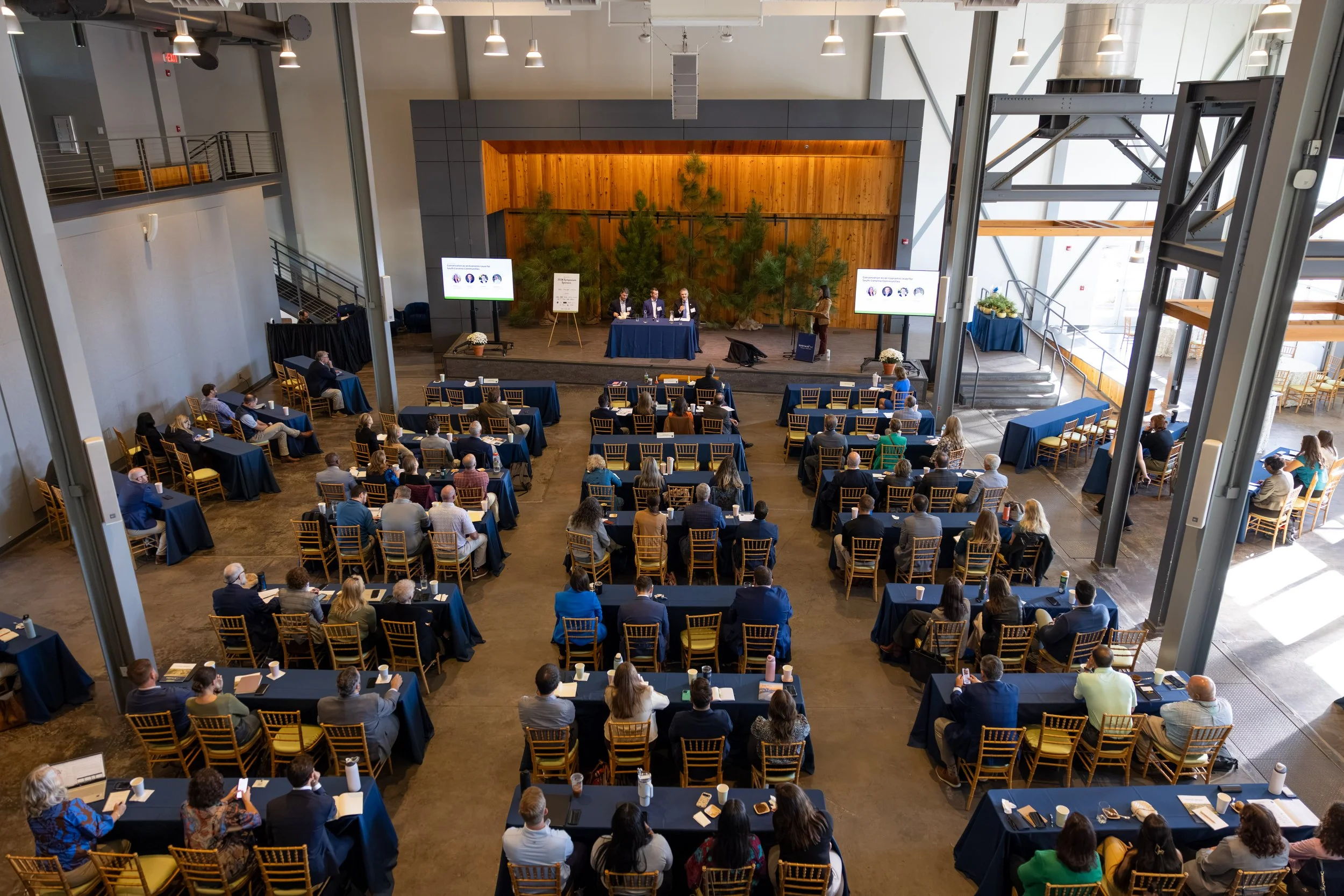
October 22, 2026 - Sustain SC’s 5th Annual Sustainability Symposium
Pre-events featured a Congaree Field Experience at Congaree National Park for Sustainability Leadership Initiative (SLI) alumni and sponsors, a VIP Reception featuring the launch of the second edition of the South Carolina Sustainability Profile and an SLI Networking Reception, both at The Armory at Savage Craft Brewery.
Five takeaways we're carrying forward:
Conservation is an economic development tool. Florence County shows how protecting natural and cultural assets can support long-term community and economic goals when local government, philanthropy and lenders work together.
Working lands are a competitive advantage. Keeping South Carolina's farms and forests working is both an economic and conservation strategy.
Growth and natural resources have to be planned together. As data center investment accelerates, early coordination on land use, siting, energy and water with communities and conservation stakeholders helpsprotect the resources that make the state attractive.
Shared data drives better decisions. The South Carolina Sustainability Profile gives businesses, policymakers and community leaders a consistent, annual benchmark across Energy, Circularity, Water and Conservation.
Corporate investment can move conservation deals forward. Since April 2025, the Land and Water Action Platform has awarded more than $439K across 29 projects in 20 counties, helping protect 18,944 acres of land and water.
Keeping South Carolina's Farms and Forests Working
Keynote speaker Robert Bonnie, founder of Sage Agronomics and former USDA Under Secretary for Natural Resources and Environment, offered a national perspective on the challenges facing agriculture and forestry and the opportunities to strengthen their long-term resilience.
In a fireside chat that followed, Dr. Matt Holt, Dean of Clemson University's College of Agriculture, Forestry and Life Sciences, joined moderator Dr. Sole Peresin, Director of Clemson's Wood Utilization + Design Institute. They explored why keeping South Carolina's working lands productive matters for rural economies, supply chains and conservation alike.
The panel discussed the Forest Products Innovation Corridor which is utilizing strategic shifts toward using wood as a primary green building material and exploring biochar and bioenergy to replace traditional carbon imports.
Conservation as an Economic Development Tool
The panel "Conservation as an Economic Development Tool" took a closer look at Florence County, where a collaborative conservation effort is showing how protecting natural and cultural assets can also advance community and economic goals. Moderated by Helen Rogers of the Open Space Institute, the discussion featured Kevin Yokim, Florence County Administrator; Harry Lesesne of the Darla Moore Foundation; and Dan Rummel of ArborOne Farm Credit. Panelists discussed the partnerships driving the work and lessons other communities across the state can adopt.
During the discussion, leaders highlighted that between 2014 and 2024, the county lost nearly 10,000 acres of cropland to development. In response, Florence County Council unanimously adopted a 25-year framework to protect 30% of the county by 2050.
Managing the Load: Data Centers and Natural Resources
During "Managing the Load: Balancing the Data Center Industry Expansion and Our Natural Resources in South Carolina," moderator Katherine Ross of Parker Poe guided a cross-sector discussion with Ming Kibel of Meta, Representative Heath Sessions (S.C. House District 46), John Truluck of Dorchester County Economic Development, Jonathan Yarborough of Dominion Energy and John Brooker of Conservation Voters of South Carolina. The panel examined land use and site selection approaches that support economic growth while considering communities and the sustainable management of South Carolina's land, water and energy resources.
A few key topics were the focus of the discussion, including cost-shifting prevention, water innovation, and site selection. Panelists discussed how data centers should bear the full cost of infrastructure upgrades, making sure that any “contracts” include “minimum billing” clauses to ensure that the burden of increased capacity does not shift to residential ratepayers.
Meta’s Aiken project was highlighted for its transition to water-free cooling technology and its commitment to “Water Positive” operations – restoring 100% to 200% of the water used back into local basins, like the Edisto River.
Industry leaders also advocated for building on brownfields or former industrial sites with existing infrastructure to minimize impact on “Greenfield” land.
Sustain SC Report-Outs and Special Recognition
Two Sustain SC report-out videos played during the day. The first highlighted a year of momentum for the Land and Water Action Platform (LAWAP): in 2026 alone, LAWAP awarded more than $186K across 17 projects in 13 counties, helping conserve nearly 6,000 acres. Attendees also got an early preview that LAWAP will have a new name and a new look in 2027, with the same mission of connecting corporate investment with conservation outcomes. Thank you to LAWAP investors: AFL, Atlantic Packaging, Coca-Cola Consolidated, Google, Norfolk Southern and Primo Brands.
The second spotlighted the South Carolina Sustainability Profile, now in its second edition. The Profile brings together statewide data across Energy, Circularity, Water and Conservation and benchmarks South Carolina against other Southeastern states.
Sustain SC also recognized Raleigh West, Founder and Principal of West Branch Advisors, LLC, as the 2026 Ethel Bowman Bunch Sustainability Award winner, honoring outstanding leadership in sustainability in South Carolina. West closed the day with remarks on tangible ways attendees can engage.
True to the theme, the event diverted roughly 200 pounds of food waste from the landfill, the most of any Sustain SC Symposium to date.
What's Next
Thank you to our speakers, partners, sponsors, Coastal Carolina University student volunteers and attendees for helping make the 5th Annual Sustainability Symposium a success.
The Symposium may be over, but the conversations don't end here. We'll keep building a more sustainable future for South Carolina at the intersection of commerce and conservation, for the benefit of our economy, environment and people.
View photos from the event and explore the South Carolina Sustainability Profile.